
How to define your legacy when selling to an EOT
Updated: May 14

At some point most company owners will recognise that their time leading a business will end and, as they explore succession options, some will choose employee ownership.
The 2014 Finance Act has encouraged many founder/owners to consider selling to an Employee Ownership Trust (EOT). The Capital Gains Tax relief it brought was recently reduced by HMRC but it remains an attractive succession option for many.
There are also other advantages that becoming employee-owned can offer owners, their employees and customers – when done well.
Yet there’s another aspect that’s important here: recognising the major part that you – as founder/owner – play in your business’s success and finding a useful way to hand on that experience to your successors before you leave.
Understanding what you want to achieve through employee ownership

One approach is to capture your reflections in a legacy document, which can be used by you or others to shape your guiding principles, mission and values.
The late Sir Ove Arup, founder of Arup, epitomised the value of creating and sharing these insights in his Key Speech. Guy Singh-Watson of employee-owned Riverford Organics is another (more recent) example of how to define your legacy as part of stepping away.
So if you’re a company owner, where do you start?
Telos Partners’ Jeremy Gadd has worked with many clients whose succession planning includes selling to an EOT. He says he has ‘yet to meet’ anyone who has found creating a legacy document easy.
‘As a founder/owner, there are things you need to know and things you need to understand about employee ownership,’ he explains.
‘You need to know the technical and practical steps to becoming employee-owned – the legal and financial aspects of this change.
'Once you know that, you need to understand what you’re trying to achieve by using an EOT for your succession model.'
Reflecting on what's made your business successful
'If you can identify the key parts of [your] journey, these can be used by your successor's successor as a point of reference once you've gone'
‘It’s helpful to clarify what’s important for you and the people you care about,' Jeremy says. 'What’s important for your employees, your business, your stakeholders, your customers? And what will the impact be?
‘First, you have to start with yourself and your partner/family, if you have one.
‘It’s not selfish. If you don’t get yourself into a place that will work for you psychologically you’ll risk messing things up.
'Sharing your thoughts through a legacy document can be a helpful place to start – if not for you, then certainly for your successors.’
The next step is to reflect on your journey.

Jeremy recognises that not all founder/owners will be comfortable with this kind of language or activity.
‘Often they don’t stop and take time to reflect because they will have been so busy building the business,’ he points out.
‘That’s why doing this with someone independent can be useful.
'The process of creating your legacy document with the support of an experienced specialist can help to create a ‘good ending’ as you prepare to let go.
‘Its purpose is to effectively capture what has made your business successful. If you can identify the key parts of that journey, these can be used by your successor’s successor as a point of reference once you’ve gone.'
Focusing on the future when you’re not there
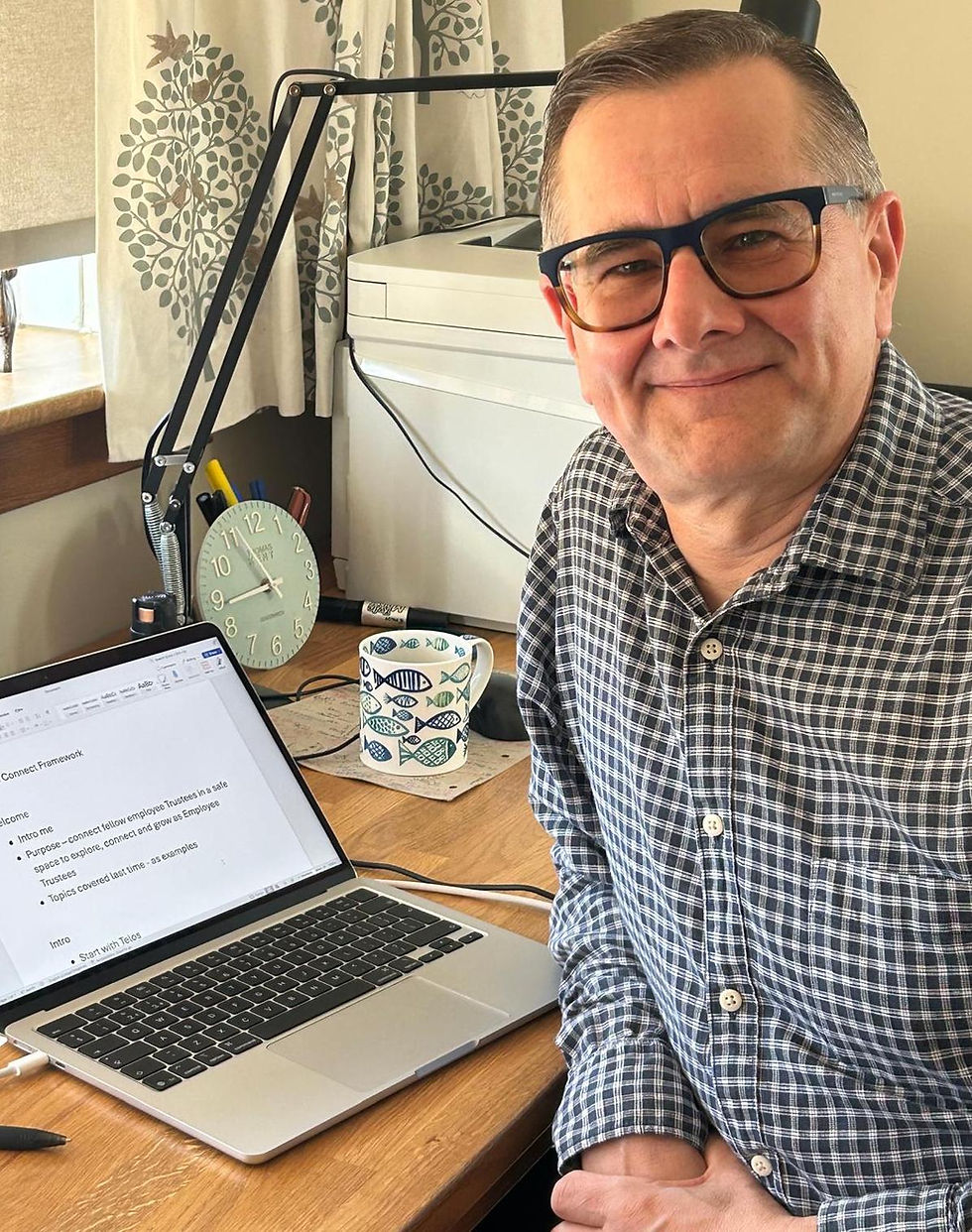
‘By being independent, Telos Partners can help you do this.
'The questions we ask will enable you to create a legacy document that can be used to design your guiding principles, influence your values and build tools that can evolve,' Jeremy explains.
‘This sets your business up to continue to be successful without restricting its ability to adapt the way it operates in years to come.
‘Your legacy document is a point in time, your opinion and view that will never change,’ he adds.
‘It’s okay that this is your interpretation because you’re the one who’s built your business, even if you’re the second or third generation of a family business.
'Your legacy is how you have taken it forward to hand over to a new ownership model.’
Using the legacy process to deliver better outcomes
'My MSc research showed me that, whether they're leaving the business or not, the founder/owner's readiness and understanding was crucial to the EO transition's longer-term success'
So what should you be considering if you want to create a sustainable legacy by selling to an EOT?
‘Although this process is about personal reflection, it’s important to depersonalise certain elements of it too,’ says Jeremy.
‘Employee ownership is a long-term view. Think about a time when you won’t be there, think about your successor’s successor. What will it be useful for them to read?
‘Doing this won’t just help to create your legacy document: the process of moving your mind from the transactional ‘here and now’ – which can be intense – to ‘future focusing’ is also very useful.’
Jeremy speaks not just from his practical experience of supporting founder/owners to prepare to ‘let go’, but from the broader knowledge he’s gained through his research into the impact of succession planning through employee ownership.
In fact, he wrote his Henley Business School MSc dissertation on ‘The impact on leaders when their businesses become employee-owned’.
‘My research showed me that, whether they’re leaving the business or not, the founder/owner’s readiness and understanding was crucial to the transition’s longer-term success,’ he explains.
‘I saw how the process of creating a legacy document can help to deliver better outcomes as the business becomes employee-owned.’
And as a founder and former owner himself, Jeremy knows the highs and lows of building a business – and the challenge of succession planning.

It was this that led him to accept Telos Partners’ invitation to merge J Gadd Associates (JGA) – the company he founded in 2014 – with us in 2024/2025.
‘To have the privilege of hearing other founder/owners record their journey and facilitate their exploration goes to the heart of why I originally created JGA,’ he reveals.
‘It can be challenging: I can’t give them the ‘answers’ – it’s their legacy, not mine – but I do say ‘don’t do it by committee’! If there’s more than one founder/owner, create more than one legacy document. This is your thinking and knowledge at this point of time.’
What to do next if you're a company owner selling to an EOT
At Telos Partners, we have a proven track record of enabling founder/owners to prepare themselves and their people for a successful transition to employee ownership.
As an independent sounding board, we can also support you if you’re considering selling to an EOT as one of several options for your exit strategy and the future of your business.
Want to know more? Visit our employee ownership page and get in touch to arrange a no obligation meeting with our knowledgeable team here. .

